"Chametz Nuksheh" pass-over don't be
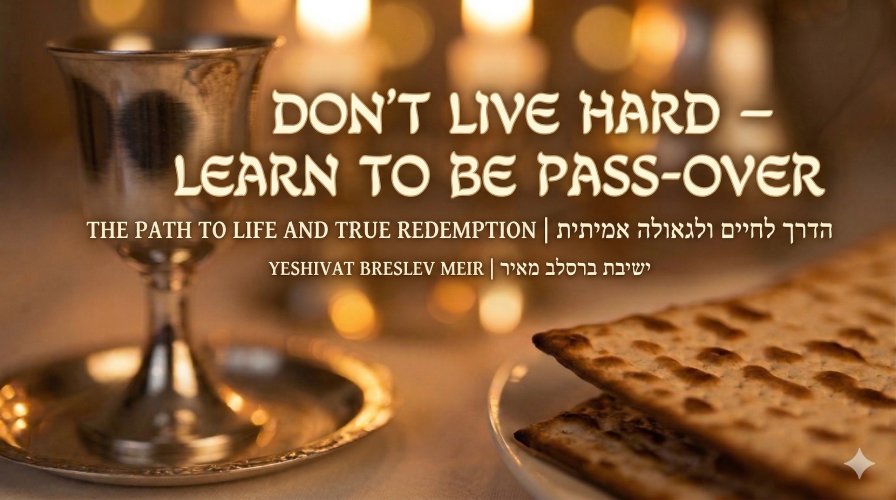
"Sometimes WE all need to learn to 'PASS OVER' – to ignore and pass as if I didn't see or hear, to flow and skip, not to be rigid except on things that are truly important and principled, like what they call a 'deadline'.
And even this must be done with wisdom -and in the next article we will explain how to live the PASS-OVER holiday.
God also 'passed over' the homes of the Jews, through their fulfillment of His commandments; in the Plague of the Firstborn,
He passed over them and did not strike them down, even though they were slaves, and the head and the doing of holiness were not complete, because not everyone was engaged in the Torah, only the tribe of Levi.
Hard Chametz or Soft Heart? The Battle Over Mind Fermentation!
How blessed are we!
Passover is just around the corner, and we are all busy with the removal of Chametz.
But just before we start scrubbing the floorboards, let's talk about the most dangerous Chametz—the Chametz within the heart.
in Short – Laws of Chametz
What Is the Prohibition of Chametz?
On Passover, the Torah prohibits five types of grain (wheat, barley, spelt, oats, and rye) that have come into contact with water and risen (fermented). The prohibition includes three central negative commandments: "bal yera’eh" (shall not be seen), "bal yimatzeh" (shall not be found), and the prohibition of eating it.
• From the Bible: "For seven days no leaven shall be found in your houses… You shall eat nothing leavened" (Exodus 12).
• From the Halacha (Jewish Law): "Chametz on Passover is forbidden from being derived any benefit from… and one violates [the commandments] of shall not be seen and shall not be found" (Siman 442, subsection 1).
What Is "Chametz Nuksheh"?
*Chametz Nuksheh* is Chametz that is not fit for normal human consumption or its fermentation process was not fully completed.
• Halacha: "*Chametz nuksheh*… is not complete Chametz, yet it is still forbidden to eat it on Passover" (Mishna Berura, Siman 442, subsection 2).
*"Chametz Nuksheh" Means in Our Lives:*
In **Spirituality**, this is the symbol for stubbornness and rigidity in our character traits, outlooks, and opinions.
When a person becomes rigid in their views, stubborn toward others, and entrenched in their positions – their mind "ferments" (or sours). This acidity is the root of all arguments, anger, and tensions at home, and the struggle in dealing with the world, with life, and even with G-d. The "storm wind" (arrogance) is what inflates the dough, causes it to become Chametz, and causes us to lose our presence of mind.
However, even though *Chametz Nuksheh* is not prohibited by thora law – it can never be nullified and can even "awaken" (become relevant) if an essential taste remains in it. Therefore, every person must remove and cleanse the stubbornness from themselves – after all, none of us are perfect, and our primary role is to seek and clarify truth from falsehood. And this is found with the Torah scholars and their disciples who are occupied with the Torah and possess clarified knowledge. This is the aspect of the Matzah.
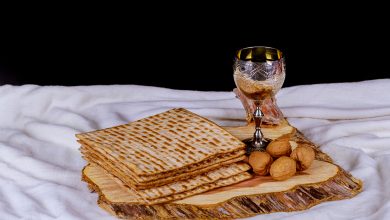
Because the Matzah is the exact opposite. It is flat, it looks "poor," but in truth, in the words of the Zohar, it is the medicine and it is holy, and it symbolizes total self-nullification before G-d and His Torah.
In holiness, there is no "storm wind" of pride; everything is precise, calculated, and measured with presence of mind according to the Halacha, without pressure or excessive strictness (chumrot).
When one merits clarifying and achieving the absolute truth, one understands that everything is holy, and then it is possible to be calm, without pressure, and without bitterness. Without anger and arguments over nonsense and the vanities of this world – just everything being holy, with thought focused on the ultimate purpose for which we live: for the life of the World to Come, to achieve eternal life, and to cause G-d gratification.
*When Should We Nevertheless Be "Rigid"?*
*Rebbe Nachman and his disciples teach us a profound point:*
Regarding anything related to holiness, good deeds, and good character traits we have already merited to master – there, one must be a "holy stubborn one." Not to give up what we have achieved! Examples include prayers on time, daily consistency in saying a chapter of Psalms for the Jewish people, putting on tefillin, gratuitous love, offering compliments, etc.
But (and here is the great secret): even when holding tightly onto the good, one must be smart, because pressure is the enemy! The moment one enters a state of pressure, holiness turns into acidity (sourness). Serving G-d out of distress and nerves is not G-d's will – certainly not at the expense of others.
*How to Know the Proper Measure?*
When and on what to compromise?
And when to stand our ground, or is it just "our" imaginations, and it's not truly G-d's will?
How to not fall from the level we have already achieved?
Where to be soft as a reed and give up our "ego" to prevent an argument?
And where to be strong as a cedar so as not to lose our spirituality?
*For this,* we need the true Tzaddikim. They are the ones who know how to guide us on the exact path, according to the Torah, in the place where we are:
Dear Community:
This year, when we remove the *Chametz Nuksheh* from the house, let us also remove the rigidity from the heart.
We ask of G-d that we merit "Mochin d’Pesach" (Passover Consciousness) – a mind clean of acidity, character traits that know occasionally how to "pass over" (skip over) what is not truly important and has no ultimate purpose or G-dly will, and how to give up our will for another in order to do G-d's will. To fill the heart with simple faith and true joy, without pressure.
Wishing you a kosher and happy Passover
R. Amiel – "Breslev Meir" in the Holy City of Jerusalem.
(FOR INTERESTED INDIVIDUALS ONLY)
## An Immense Merit to Be Partners in the "Kimcha D’Pischa" of the Breslov Hasidim
Our Sages taught that there is no mitzvah as great as the charity of "Kimcha D’Pischa" (Passover Flour/Funds).
To ensure that every Torah scholar and every family in need merits and feels the redemption – with everything required for the holiday, from Matzahs, wine, and food to clothing – and achieves true holiday joy.
**Be our partners!** Help us turn "acidity" into sweetness for those who need it. Every contribution is an opening for salvation and internal cleansing of the heart.
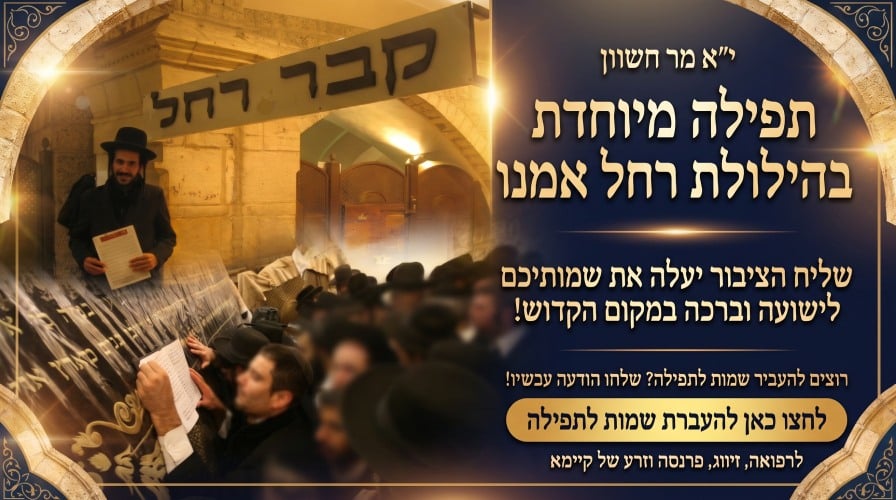
*For those whose hearts are moved* – link for donations and to submit names for blessing and prayer during the days of Passover – enter https://www.breslevmeir.com/kimcha-depischa/
Prayers from the Heart https://chat.whatsapp.com/L9rfyrMFbDxB6hSszW14SH
Share with friends and subscribe to the group